The verdict: ‘Standards’ for HPOZ not ready for prime time
By Brian Curran
Los Angeles Historic Preservation Overlay Zone community groups and preservationists presented a unanimous rebuff of a new draft of Objective Design Standards upon their release in late June by the City Planning Department.
In a letter regarding the area’s guidelines created by Planning, Hancock Park Homeowners Association President, Cindy Chvatal-Keane spoke for many organizations in stating that, “These standards will effectively upend the entire purpose of preservation overlay zones by replacing careful, context-specific stewardship with an overly permissive checklist.”
These sentiments were echoed in Greater Wilshire’s HPOZ communities as well as in affected historic districts throughout the city including Hollywood, Miracle Mile, West Adams, Angelino Heights, Jefferson Park, and many others.
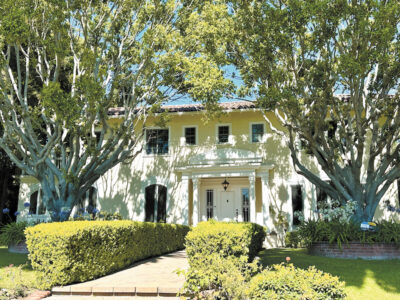
HOME on South Arden Boulevard in Hancock Park.
The main concern was that the ODS did not adequately protect each HPOZ’s unique character. Because the standards are intended to cover all 35 HPOZs, they lack the detailed guidance provided in the preservation plans needed to address architectural styles, character-defining features, and development patterns that shape an HPOZ’s identity and are essential to ensuring compatible new development. In a striking exception the ODS gave site-specific guidance and exemptions to the standards for the Gregory Ain Mar Vista Tract and the Balboa Highlands HPOZs, the only two mid-century HPOZs.
Others felt the ODS were silent on the Secretary of the Interior’s Standards, which guide the repair, alteration, and addition to historic buildings while ensuring their historic character and distinctive materials are preserved. They provide the core design principles which must always be incorporated in any addition or alteration to historic resources: preservation of existing historic features and materials; compatibility of all new development with the size, scale, proportions, and design of the existing primary dwelling on the property; differentiation of the new work from the old; and subordination of new development to the historic dwellings. One proposed standard called out by communities (Category 7, ODS 2) allows for the construction of a secondary structure on a contributing property to be one story higher than the primary residence. This is in direct opposition to the idea of subordination.
The development of objective standards for HPOZs were deemed necessary by the city to comply with various state housing laws that passed in the last few years, such as Senate Bills 330 and 35 and Assembly Bill 2011. Currently alterations and new construction within HPOZs is governed by an individually-tailored preservation plan and design compliance overseen by an HPOZ board for each of the city’s 35 HPOZs. This arrangement is now seen by city authorities as too “subjective” for new construction within these zones and not in conformity with state law.
California law defines an objective (design) standard as one that “involves no personal or subjective judgment by a public official” and is an available and easily verifiable benchmark for an applicant to find and apply to a project.
The creation of a set of objective standards is what Architectural Resources Group, the firm contracted by the city, set out to do for the city’s 35 unique HPOZs.
According to City Planning’s Fact Sheet on Objective Design Standards for Infill Housing (building of new homes on empty or underused lots in existing neighborhoods) and ADUs (Accessory Dwelling Units) in HPOZs, these standards are intended to only apply to certain eligible project types. These are new multi-family residential infill (including eligible streamlined affordable housing projects), new mixed-use infill, and new ADUs. They would not apply to single-family residential infill (other than small lot subdivisions) or exclusively commercial projects or other non-residential projects in HPOZs. Rehabilitation work to existing primary contributing buildings will still be subject to review under the existing HPOZ Preservation Plan guidelines.
What is certain is that now that this proposed policy is public, the ODS for HPOZs are generating more questions than answers. It only hints at a larger issue that is the goal of these standards: densification in L.A.’s most historic communities. The ODS say nothing about how this is to be compatibly achieved, how lot splits are to be handled, if lot combining is to be prohibited, etc.
Comment period extended
The negative public response has had an effect. City leaders from the mayor’s office to the Planning Department have been meeting with furious community leaders and groups. They have extended the comment period and are planning for much more public input before the ODS are to be adopted by the end of this year.
The verdict is in: the ODS as presented are simply not fit for purpose. They are not ready for prime time.
Category: News