LADWP—What we’re paying for, what we’re getting
By Jon Vein
Every two months, Los Angeles residents receive a bill from the Department of Water and Power. For households struggling with rising costs for housing, groceries, insurance, and nearly everything else, opening that bill has become increasingly unpleasant. When the amount due is hundreds of dollars more than expected, the concern is understandable. But how many of us understand what we’re paying for? Are rising bills driven by electricity rates, increased consumption, pensions or something else? Is LADWP expensive compared with neighboring utilities? And what is it doing well—or poorly?
LADWP is the nation’s largest municipally owned water and electric utility, serving more than four million people through approximately 1.6 million electric meters and 700,000 water meters.
Its history dates to 1902, when Los Angeles purchased its privately owned water system. Under William Mulholland, the city built the Los Angeles Aqueduct, which began delivering water from the Owens Valley in 1913. Municipal electricity followed, championed by Ezra Scattergood, and the operations were consolidated in 1937. These public works helped transform Los Angeles into a metropolis.
Unlike Southern California Edison, LADWP is publicly owned, without private shareholders. But that doesn’t mean costs are low—or that everything on your bill is an LADWP charge. The department also collects payments for wastewater treatment and trash collection administered by LA Sanitation, plus a 10% city utility users tax on applicable electricity charges. These services appear on one bill, generally issued every two months.
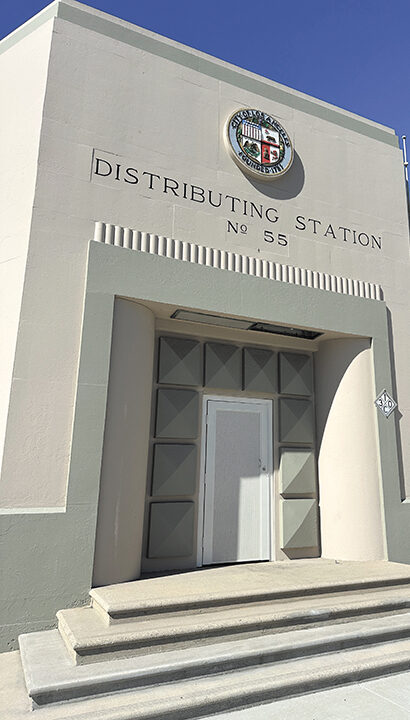
LADWP on Third Street.
According to LADWP, electricity consumption during recent heat waves was approximately 20% to 30% higher than comparable periods last year, largely because of air conditioning. But consumption isn’t the whole story. LADWP’s second-tier when consumption is higher than baseline residential electricity rate increased from 30.6 to 33.1 cents per kilowatt-hour, and spending approved in September 2025 increased median residential electric bills approximately 2.7% and water bills 3.6%.
These increases reflect infrastructure replacement, purchased electricity and water, wildfire prevention, environmental requirements, and operating costs. Higher consumption can also push households into more expensive rate tiers.
Sanitation charges increased substantially following City Council-approved rate increases. According to the Ratepayer Advocate, additional revenue supports sewer rehabilitation, wastewater treatment, recycling, waste diversion, and environmental compliance. These are legitimate needs, but residents deserve clear explanations of how efficiently the money is spent. This author contacted LA Sanitation for details but had not received a response as of publication.
How does LADWP compare with other utilities?
A February 2026 Ratepayer Advocate analysis found average electric bills for smaller households approximately 42% lower than Southern California Edison’s and 27% lower than Glendale’s, but 35% higher than Anaheim’s. Comparisons vary by usage, but LADWP is not the region’s most expensive utility.
Of course, competitive rates offer little comfort to someone struggling to pay.
Employee compensation, particularly pensions, are another concern. LADWP says labor and retirement expenses represent approximately 27% of its budget. It competes with private utilities for skilled workers and reports spending $60,000 to $100,000 training employees who subsequently left for higher-paying positions.
Importantly, LADWP’s pension system is financially strong. Its retirement plan was 101.25% funded as of June 30, with approximately $25 billion in assets supporting roughly 23,000 members. Its required employer contribution rate declined from 16% to 15.7% of payroll. That’s impressive compared with public pension systems carrying substantial unfunded liabilities.
A well-funded pension system is a significant accomplishment. The continuing challenge is to maintain competitive compensation, retain skilled employees, and operate efficiently while keeping rates affordable for customers.
The department credits infrastructure investment, better management, and staffing. These comparisons are promising, although long-term reliability data would provide a fuller assessment.
Technology presents another mixed picture. LADWP is introducing advanced meters to improve billing accuracy, identify outages, and eventually help customers monitor consumption.
Some customer service systems being replaced are more than 25 years old. Modernization is overdue but expensive. The Board of Water and Power Commissioners recently received a public cost-benefit presentation on advanced metering. The test will be whether projected savings and improvements materialize.
LADWP has oversight. Its Commission holds public meetings examining rates, investments, and operations. The independent Ratepayer Advocate evaluates performance and represents customers’ interests. These are meaningful safeguards, but accountability depends on results.
Consider billing disputes. LADWP says approximately 97% of meters are read every two months. Estimates generally occur when meters are inaccessible and are reconciled after an actual reading.
Nevertheless, billing and payment disputes were the most common concern among 100 customer inquiries analyzed by the Ratepayer Advocate between July 2025 and June 2026. The question isn’t simply whether meters are accurate, but whether problems are resolved promptly.
If your bill seems unusually high, check for estimated readings, leaking toilets, irrigation problems, or unexpected air conditioning usage. LADWP says it will investigate questionable charges and test meters when necessary.
The department offers assistance. Its Level Pay program spreads estimated annual costs into predictable monthly payments. It doesn’t lower the total, but makes budgeting easier. Interest-free payment arrangements, income-based discounts, medical allowances, and efficiency rebates are also available.
But assistance needs improvement. The Ratepayer Advocate found that customer assistance lost approximately 10% of its purchasing power over five years to inflation. Community research identified confusing bills, unpredictable charges, and difficulty accessing programs, particularly for renters as areas for improvment.
Accountability extends beyond bills. In Hancock Park, historic concrete streets are sometimes left with asphalt patches after utility work. LADWP explains that its crews make temporary repairs to reopen streets promptly, with permanent restoration subject to city engineering standards. Full curb-to-curb repaving is uncommon, although concrete restoration requirements apply to affected areas.
But residents should receive the permanent restoration required by law, not be left indefinitely with temporary patches. Whether the responsibility falls to LADWP, Street Services, or another city agency, the city as a whole must ensure the work is completed properly. Administrative backlogs should not excuse unfinished repairs.
Another concern is potential liability from the Palisades fire. LADWP says customers are not currently being charged for possible litigation judgments, although legal expenses and infrastructure rebuilding costs are part of its operations. Future liabilities remain uncertain.
LADWP faces enormous challenges: aging infrastructure, extreme weather, water security, and cleaner electricity. These require investment, and expecting costs never to rise is unrealistic.
But residents shouldn’t accept every increase without scrutiny. LADWP deserves credit for competitive rates, strong pension funding, and reported reliability improvements. It must also demonstrate efficiency, accessible customer service, and accountability when things go wrong. Ultimately, the question isn’t whether LADWP is perfect. It’s whether Los Angeles residents receive reliable service, reasonable value, and transparent explanations for the money they’re asked to pay. That’s a standard LADWP—and every city department—should be expected to meet.
Visit ladwp.com/levelpay or ladwp.com/save or call 1-800-DIAL-DWP.
Category: News