Measure on election ballot would double ailing L.A. parks funding
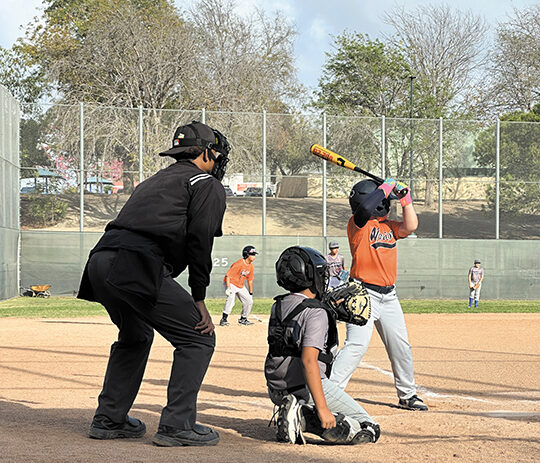
FUNDING FOR PARKS, like Pan Pacific Park, directly provides the public with recreational facilities such as baseball fields.
By Suzan Filipek
Parks are universally beloved. They’re where kids play after school and families and neighbors gather. Trees, greenery, and open space add to our physical and mental well-being and make communities more resilient to the effects of climate change.
Yet, according to the city’s 2025 Park Needs Assessment, funding for L.A.’s 662 parks has not kept up with inflation and the growth of our park system.
“The result is visible across the city: aging infrastructure and parks that don’t have the staffing or resources they need to stay clean, safe, and welcoming for everyone,” Councilmember Hugo Soto-Martínez said following a recent release ranking L.A. parks near the bottom when compared to major city parks across the nation.
L.A. officials estimate it costs $558 million a year to manage our parks, yet are budgeted $350 million. The councilmember is hoping to change that.
City Council approved a measure, L.A. City Charter Amendment PRK, which is on the Tue., Nov. 3 ballot. If approved by voters, the Department of Recreation and Parks budget would increase gradually over a decade.
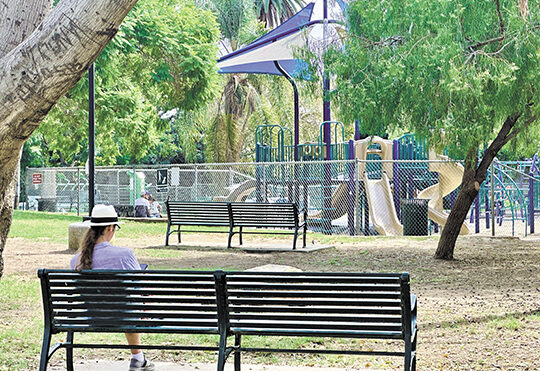
NEIGHBORHOOD PARKS like Robert Burns, at 225 N. Van Ness Ave., offer a refuge for city dwellers.
It’s not a tax or a bond, but rather a tool to work with the city budget—the City Charter requires the Parks Department receive .0325% of the total assessed value of taxable properties. As it stands, the minimum allocation would grow to $493 million over the next decade.
If the charter amendment is approved, that amount could double by 2036 to roughly $986 million.
Councilmember Katy Yaroslavsky is among supporters of the measure, saying the decade-long timeline will give leaders time to fund the proposal without cutting critical services.
Other supporters include the Trust for Public Land, TreePeople, Friends of the Los Angeles River, and Rev. Gregory Boyle, founder of Homeboy Industries.
Critics say the measure would cut funding for other services. They include Councilmember Bob Blumenthal and the Los Angeles Police Protective League, the labor union and political advocacy group which represents 8,500 officers.
What’s not contested is the state of L.A. Parks—they came in 93rd in the Trust for Public Land’s 2026 ParkScore Index, which ranks 100 major city parks.
L.A.’s low score may not seem surprising to Angelenos as they meander through city traffic and congestion and hop on freeways with hardly a green patch in sight.
Also not surprising is that among the five categories tested by the Index, the Investment category drew a dismal 30 points out of 100–$125 per capita is spent each year on parks and recreation.
There was some good news in the latest ranking.
Los Angeles scored 53 out of 100 points in the Acreage category for an abundance of large “destination” parks, which provide mental health, climate, and conservation benefits. This ranking had two components: the overall area dedicated to parkland, 67 out of 100 points, and median park size, scoring below average at 38 out of 100.
In the Access category, L.A. ranked 48 points out of 100. Nearly 62% of the population live close to a park—within a half mile.
Scores dropped in the Amenities category, with 26 points out of 100. Senior and rec centers did best, with 55 points, followed with 32 points for its number of basketball hoops. Playgrounds, of which there are 400, received 11 points; sport fields and diamonds (a total of 447) scored 5; and the city’s 15 dog parks earned 4 points.
The Park Space Equity category earned 28 points out of 100. This rates the fairness in the distribution of parks between neighborhoods by race and income. It scores 52 points for people of color living within a 10-minute walk of a park and 51 points for low-income households. Residents living in neighborhoods of color have access to 79% less nearby park space than those living in in white neighborhoods. Residents living in lower-income neighborhoods have access to 85% less nearby park space than those in higher-income neighborhoods.
Throughout the city, parks total 40,000 acres and serve a population of 2.4 million Angelenos.
In our area, Hancock Park and Larchmont has a bounty of tree-lined streets and green parkways, in addition to several parks, such as Pan Pacific Park, which boasts 32.18 acres and a tree canopy that drapes 14.5% of it.
Adjacent Hancock Park, in Museum Row, exceeds 23 acres of greenery, with a 15.6% tree canopy.
Smaller, neighborly Robert Burns and Harold A. Henry parks and Wilshire Green—a sliver of a park behind the Wilshire Courtyard in Miracle Mile—are a welcome refuge in a crowded city.
Further out, Seoul International Park, near Olympic Boulevard, is several blocks east of Western Avenue. Continuing east, stately MacArthur Park had a major clean up recently.
Heading north of Larchmont is Runyon Canyon and Griffith Park, which spans more than 4,000 acres of rugged terrain.
Top cities in this year’s Index included Washington, D.C.—which came in first for the sixth consecutive year— Irvine, California, which took second place, and Minneapolis, Minnesota, in third place.
San Francisco made the sixth spot, Seattle was eighth, and Portland was ninth.
Places that did the worst, behind Los Angeles, included Mesa, Arizona; Louisville-Jefferson County, Kentucky; Lubbock, Texas; and Oklahoma City. Durham, North Carolina, was noted as last place. Visit tpl.org for more information.
Category: News