


Book challenges everything we think we know about education
 “The point of education is to be an ethical citizen. If you’re not going to be a decent person as you increase your education, your wisdom, I really don’t know the point of it,” said author Min Jin Lee.
Lee’s previous novel, “Pachinko,” was one of my favorite books of all time. Yes, all time. When I heard she had a new novel, one that took her 10 years to complete, I knew I had to read it immediately.
Before reading American Hagwon, I had no idea what a “hagwon” was. I quickly learned that it’s the Korean word for a private learning center. Many hagwons focus on core school subjects and test prep, while others offer skills like piano, art, and taekwondo. I was shocked to find out that almost 80% of kids over age 5 in South Korea attend at least one hagwon, spending an average of seven hours a week there. Needless to say, hagwons are a very important part of Korean culture.
The premise: The story follows John and Helen Koh and their three children: sons Bo and DH, and daughter Mido. John’s corporate job takes the family from South Korea to America and Australia before bringing them back to South Korea in the early 1990s, where they struggle to readjust to Korean society. But when John is betrayed by his boss and the 1997 Asian financial crisis strikes, the Koh family is forced to regroup and do whatever it takes to survive.
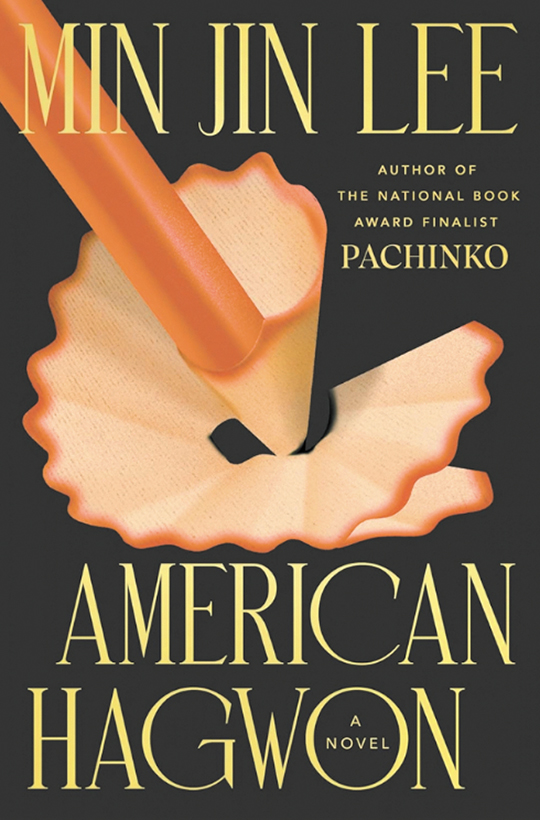 They move to Australia, where Helen’s brother lives, before relocating to Southern California to start over. John and Helen soon discover that their professional standing and past accomplishments count for little in their new life. Forced to take on low-paying, physically demanding jobs, they do whatever they can to provide for their family. Meanwhile, their children’s lives unfold along different paths, with education remaining a force in each of their futures. Their stories eventually intersect with the world of the American hagwon, where students undergo intense prep to try to get into the most competitive universities.
The verdict: I absolutely loved everything about this book, even more than “Pachinko”—and I really loved that book! Lee has a way of pulling you so deeply into a story that the pages practically turn themselves. At 650 pages, this is quite a long novel, but I was so invested in these characters and their journeys that I could have read another 600 pages. The themes are powerful and relatable, particularly as a parent. Lee explores the idea of academic achievement as a false guarantee of a good life, the suffocating pressure to attain status, and how much of ourselves we’re willing to sacrifice in the pursuit of success. These are big questions that linger long after you finish reading. Lee is a masterful storyteller, and I recently learned that “American Hagwon” is the third of four novels in her loosely connected “Diaspora Quartet,” exploring Korean culture and identity. I can’t wait for the next one, and hopefully, we won’t have to wait another 10 years!
Fun fact: I listened to several podcast interviews Lee gave to promote “American Hagwon.” In one interview, she discussed one of the central questions that guided her research and writing: Why are Koreans so obsessed with education? Lee clearly devoted an enormous amount of time to researching this question. She pointed to several troubling realities in South Korean society, noting the country’s high suicide rate among nations part of the Organization for Economic Co-operation and Development, its high rate of cosmetic surgery, and its high level of elderly poverty. For Lee, these issues are connected to a deeper problem with the education system: a crisis of learning itself.
Category: Entertainment
