Fewer mosquitos, more West Nile?
 California has recently experienced a spike in West Nile Virus cases, raising alarm and bringing up various questions about health, safety, and precautionary measures. In August, a San Fernando Valley resident was hospitalized for neurological complications caused by a severe WNV infection, leading Los Angeles County to record its first death of the year related to WNV.
In brief, WNV is spread mostly through the bite of a mosquito. It is not spread by coughing or sneezing, and it takes 2 to 14 days to develop flu-like symptoms after being bitten. You can read more details on these facts at lawestvector.org.
What does an illness from WNV look like? The majority of humans are asymptomatic when infected, however 20% of cases progress into fever, body aches, vomiting and diarrhea. A very small percent of cases (0.6%) cause more severe symptoms, including high fever, muscle weakness, and a stiff neck. The elderly and immunocompromised are considered a high-risk group, as these individuals have a higher chance of developing more severe symptoms. The symptoms of these very rare (but dangerous) cases are caused by the virus becoming neuroinvasive (breaching the blood brain barrier) and causing neural inflammation (meningitis and/or encephalitis).
WNV is carried by mosquitos who feed on infected birds. A species known as the Culex mosquito is responsible for transmission. Interestingly, Greater L.A. Vector Control released an update Sept. 28 stating that Culex mosquito abundance is below the five-year average, yet WNV activity is significantly elevated. So, what’s behind this seemingly disproportionate relationship?
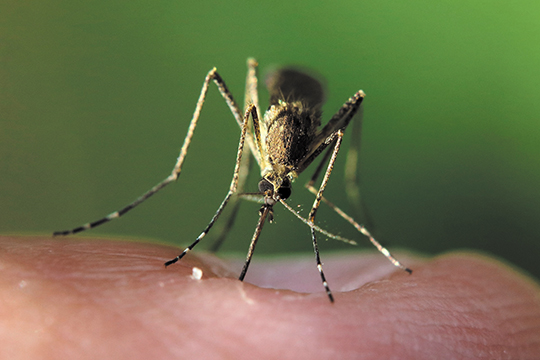
THE MOSQUITO may be the world’s deadliest creature.
Photo by Emphyrio
One cause attributable to this phenomenon is a change in weather patterns. In short, things have been heating up. Los Angeles experienced the warmest winter on record this year. Risk of infection depends on the proportion of mosquitoes carrying the virus. Outbreaks can occur even when mosquito count is low if the rate of infection among them is high enough. Warmer temperatures can speed up the development of WNV inside mosquitoes, no matter how many of them there are. One 2021 study even found that when WNV was grown in mosquito cells at 30ºC rather than 25ºC, it developed more mutations and became better at replicating. The virus is maturing faster, and they can thereby transmit the virus sooner after feeding on an infected bird.
Additionally, although there are fewer mosquitos present in the area, their feeding behavior may influence the prevalence of WNV. In other words, whom mosquitoes bite can change human risk. One study on Culex behavior in the United States found that their feeding on humans has risen sevenfold over the course of the summer, which coincided with a decline in certain bird populations who had been preferred hosts for the mosquitoes. Interestingly, total bird abundance has actually increased, suggesting the availability of particular bird species matter.
In terms of protecting yourself, the best way forward is to avoid mosquito bites. Common protection practices may include covering exposed skin with clothing, adding screens to your windows, eliminating any sources of standing water near you, and using a mosquito repellant that is registered with the Environmental Protection Agency.
I remember how surprised I was as a child when I read somewhere that the mosquito is considered the world’s deadliest animal because of the diseases it transmits. The mosquito has an extraordinary reputation, and taking that seriously can start with something as ordinary as checking your backyard for standing water.
Comments? Email pcd1130@gmail.com.
Category: News