Los Angeles reconsiders the size of its city council as charter reform advances
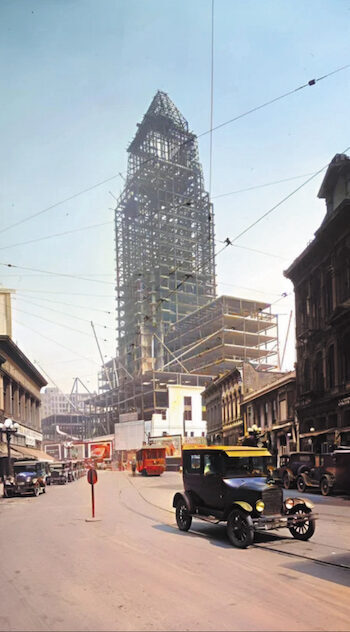
LOS ANGELES CITY HALL being built in the 1920s, when the size of the City Council was last set.
By Jon Vein
Los Angeles is again confronting a question that has surfaced periodically over the past several decades but has never been resolved: whether a city of nearly four million people can still be effectively governed by a City Council made up of just 15 members.
This time, the issue is not abstract. A Charter Reform Commission appointed by city leaders is reviewing potential amendments to the City Charter, including whether to increase the number of council seats. The commission is expected to deliver its recommendations later this year, potentially setting the stage for a ballot measure in 2026.
While previous efforts to expand the council have failed, city officials, governance experts, and community advocates say the context has changed—and that the mismatch between the city’s size and its governing structure has become increasingly difficult to ignore.
A council that has not grown with the city
The size of the Los Angeles City Council was last set in 1925, when voters approved a revised City Charter establishing 15 single-member districts. At the time, Los Angeles had just over one million residents and a far less complex municipal apparatus.
Today, the city’s population is approaching four million, spread across more than 500 square miles. The scope of city government has expanded dramatically, encompassing issues ranging from homelessness and housing development to climate resilience and public safety. Yet the number of councilmembers has remained unchanged for a century.
As a result, each councilmember now represents roughly a quarter-million residents. That scale has reshaped the role of a council office, which functions not only as a legislative post but also as a constituent service center and informal problem-solving hub. Even well-staffed offices struggle to maintain consistent engagement across districts of that size.
Why expansion failed in the past
Los Angeles voters have rejected council expansion before, most notably during the 1999 charter reform election. That year, voters approved sweeping changes to city governance, including strengthening the mayor’s authority and creating a citywide system of Neighborhood Councils. At the same time, they voted down ballot measures that would have increased the number of council seats.
Several factors contributed to those defeats.
Public trust in City Hall was low, and opponents framed expansion as adding more politicians without offering a clear case that it would improve accountability or city services. The proposals competed for attention amid a crowded reform package, and expansion lacked the visibility or urgency of changes to the mayor’s powers.
Cost concerns also played a role. Although the projected budget impact of adding council seats was relatively small, critics emphasized the symbolic cost of enlarging government, and supporters struggled to articulate tangible benefits that voters could expect in return.
Equally important was the creation of Neighborhood Councils, which were presented as an alternative way to bring government closer to residents. For many voters, the promise of dozens of local advisory bodies felt like a sufficient compromise — one that avoided increasing the number of elected officials.
Limits of the neighborhood council system
More than two decades later, Neighborhood Councils remain an established part of Los Angeles civic life. There are now 99 councils, offering forums for residents to raise concerns and advise city officials.
The system has expanded participation and created new pathways for civic engagement. But Neighborhood Councils are advisory bodies. They do not pass ordinances, control budgets, or make binding policy decisions.
Over time, it has become clear that they have not reduced the workload of City Council offices or significantly altered the concentration of power at City Hall. Instead, they operate alongside a council structure that continues to place substantial authority in the hands of a small number of elected officials.
That reality has prompted renewed scrutiny of whether advisory councils alone can address representation challenges in a city of Los Angeles’ size.
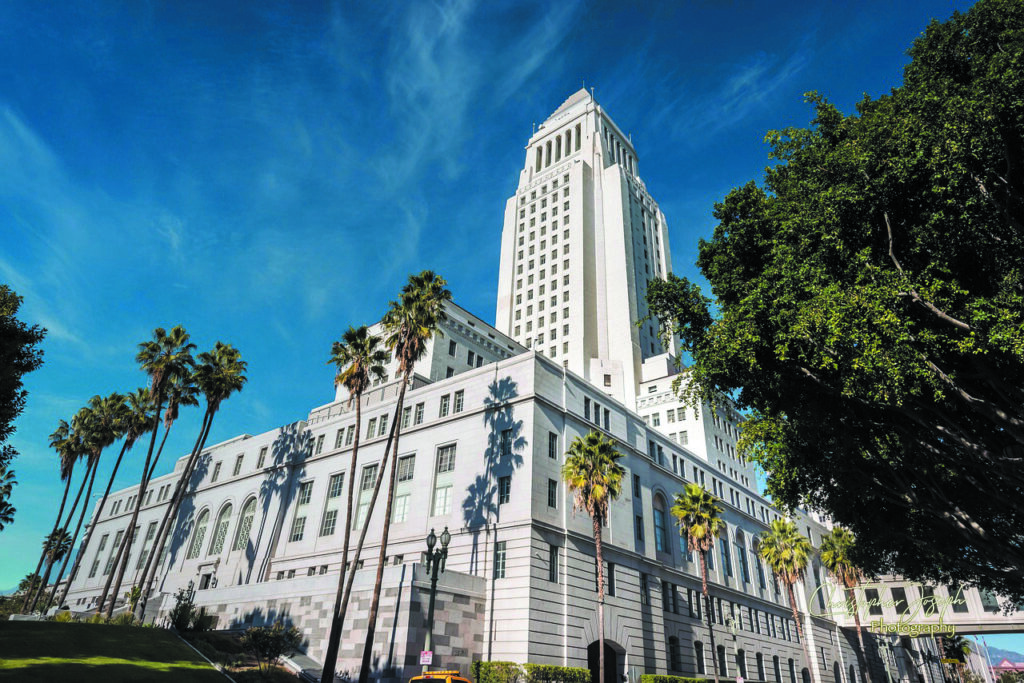
LOS ANGELES CITY HALL in the current day.
Why the debate looks different now
What distinguishes the current discussion from earlier efforts is how the argument for expansion is being framed.
Rather than focusing solely on representation, proponents point to structural pressures that have intensified over time.
Councilmembers wield significant influence over land use, development approvals, and discretionary spending within their districts. With only 15 seats, that authority is highly concentrated, increasing the stakes of individual decisions and the burden placed on each office.
Supporters argue that adding council seats would reduce district size, make elected officials more accessible, and distribute power more evenly. They also contend that a larger council would function more like a legislative body, with policy shaped through broader coalitions rather than through a small number of powerful offices.
There is also a practical capacity argument. Council offices increasingly serve as intermediaries between residents and city departments that are themselves stretched thin. Smaller districts could allow councilmembers to spend less time managing volume and more time on oversight and problem-solving.
What expansion might look like
The Charter Reform Commission has not endorsed a specific model, but several options are being discussed. Some proposals would make a modest change, increasing the council to 17 or 19 seats. Others envision a larger expansion to 21 or even 25 members, bringing Los Angeles closer to peer cities in terms of representation.
Each option carries trade-offs. Smaller expansions would be easier to implement but might leave districts comparatively large. Larger expansions would reduce district size more significantly but raise additional questions about cost, district boundaries, and the pace of implementation. Commission members have also discussed whether changes should be phased in over multiple election cycles to avoid disruption.
Concerns about cost and complexity
Opponents continue to raise concerns about the financial and administrative impact of expansion, particularly at a time when many city departments are facing budget constraints.
City budget analysts note that even a sizable expansion would account for a small fraction of the city’s more than $13 billion annual budget. Council offices represent a modest share of total spending, and supporters argue that improved oversight and responsiveness could help prevent costly delays or inefficiencies elsewhere in government.
Others worry that a larger council could become unwieldy or more fragmented. Supporters counter that Los Angeles already struggles with coordination and transparency under the current structure, and that concentration of power has created its own inefficiencies.
What comes next
The Charter Reform Commission is expected to continue public hearings and outreach throughout the year as it refines its recommendations. While a charter amendment could technically appear on a primary ballot, city officials have indicated that a November general election is more likely, given the complexity of the issue and the need for voter education.
Whether voters ultimately support expansion remains uncertain. But for the first time in years, the question is being evaluated less as a symbolic reform and more as a practical response to a governing structure that has not kept pace with the city it serves.
In that sense, the debate is less about adding seats than about whether Los Angeles is prepared to modernize a system designed for a much smaller, simpler city.
Category: News