Wanna bet?

Let’s play Jeopardy; I’ll give you the clue, you come up with the question. Ready?
The answer is, $165 billion. If you guessed “How much money was wagered on sports in 2025,” you’re right! That is a 2400%, (you read that right) increase since 2018, when the U.S. Supreme Court ruled to give states the right to decide the legality of sports betting. How did we get here? How did sports gambling become so big?
The answer is, this was probably always going to happen. The public’s desire to wager on something they love to watch—11 of the 13 highest-rated television events in history are Super Bowls—was always significant, it was just a matter of society catching up and becoming comfortable with that demand.
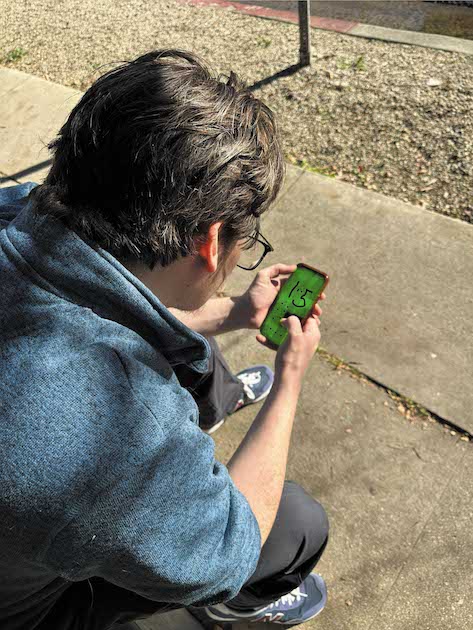
CALIFORNIA VOTERS rejected Prop 27 in 2022 to legalize online sports betting, but residents often use offshore sportsbooks.
Growing up a child of the ’80s, I was a huge sports fan, but it didn’t seem like sports betting loomed large.
But then a story dropped that was too big to ignore. Pete Rose, the all-time hits leader in major league baseball and player-manager of the Cincinnati Reds, was suspended from the game for life for betting on games involving the team he was managing. A sport that clings to its stats and records like no other banned one of the biggest names to ever play the game.
The first modern gambling scandal occurred in 2007 when NBA referee Tim Donaghy admitted to betting on games he officiated, as well as providing inside information to gamblers. The bomb dropped in the lap of the NBA Commissioner David Stern, who presided over a meteoric rise of the league in profits and popularity. Stern received a call from the FBI in June 2007, just days after the Spurs completed a four-game sweep over the Cavaliers and a promising young player named LeBron James. The FBI informed Stern they were investigating Donaghy for suspicious, gambling-related activities; a month later they confirmed their findings to him and Donaghy owned up to his crimes.
An ashen-faced Stern revealed all of this in a 72-minute press conference, adding when he first learned of the FBI investigation, he said, “I can’t believe it’s happening to us,” and called the entire affair “the worst situation I have ever experienced as a fan of the NBA, lawyer for the NBA, or a commissioner of the NBA.”
And that’s the thing. These kinds of scandals were jaw-dropping at the time. They were shocking. That is no longer the case.
Since sports betting gained legality in 2018 it’s moved from shady backrooms to prime time. Literally. Broadcasts of games now prominently include updated gambling references throughout the game. Viewers can not only bet on the game beforehand, but throughout, as the odds shift.
But fans betting on sports is innocuous—for the most part. The problem is when the participants do it, something that’s been happening with increasing frequency.
Several athletes have been ensnared in gambling scandals. Former Atlanta Falcons receiver Calvin Ridley was suspended for one year for betting on NFL games. In May 2023 the University of Alabama fired its head baseball coach after suspicious gambling activity in which a friend of the coach bet against the Crimson Tide after receiving communication from the coach. In 2024 an employee of the Jacksonville Jaguars was sentenced to prison for stealing millions of dollars from the NFL team, most of which he funneled directly into his FanDuel account.
In 2024 Jontay Porter of the Toronto Raptors was suspended for life for his involvement in prop bets—feeding insider information to gamblers who can score big on those bets which require a bettor to wager on how many rebounds a player will grab in one game, for example. If a player twisted an ankle in the pregame shoot around, that could be valuable insight to bettors.
It’s prop bets, and the involvement of players who are uniquely equipped to provide bettors information, that have drawn the most scrutiny. And the names of those involved are growing more prominent. An MLB All-Star closer on the Cleveland Guardians has been suspended over a gambling inquiry, as was a sitting NBA coach—Chauncey Billups of the Portland Trailblazers—for his role in a gambling investigation.
Sports viewership is an inevitable behemoth, and gambling on those games is a cat that’s not going back in the bag. Fans now have a reason to hang around to the last whistle to see if the fourth guy off the bench scores basket.
Most experts agree that the biggest opportunity to curb corruption is through those prop bets. They are fun for fans—throw a quick $20 on whether (name a basketball player) will grab two rebounds, or whether a pitcher’s first pitch will be a ball or a strike. The problem is, the players themselves are aware of those bets, and it’s too easy—and tempting—for them to influence their outcomes in a way that doesn’t seem like it’s influencing the outcome of the game. Which is exactly why NCAA President Charlie Baker has been advocating for the banning of prop bets in college sports; many think doing the same in professional sports would reduce nefarious activities by its participants.
Whatever the case, something’s got to give, because the combination of legalized betting, technology-enabled apps that make access easy, and the ubiquitous references to gambling through sports networks and media personalities have created a perfect storm that shows no signs of slowing.
Category: Entertainment