Two exhibits showcase unusual Japanese craftsmanship
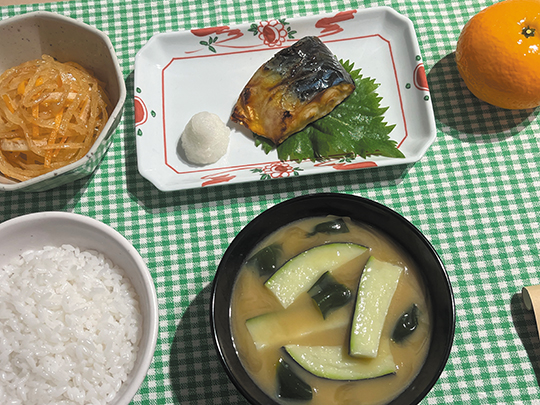
REPLICA BOWL OF SUSHI, Japan House.
Japan is trending as a travel destination and in Los Angeles, with our relative proximity to Asia, the number of people winging to that island nation has risen exponentially since the pandemic. The food, of course, is a draw, although we have hundreds of lauded sushi restaurants in our own backyards. Others are attracted to the aesthetic—the fine craftsmanship of woodworkers, potters, and other artisans.
For those who want to experience more unusual Japanese crafts, there are two delightful exhibits worth catching right here in L.A. “Looks Delicious!” at Japan House, explores the art and craft of Japan’s food replica culture, and “Package Craft: from Candy Box to Sculpture,” at the Japan Foundation, displays sculptures made by creatively cutting and folding food and beverage containers.
“Looks Delicious!”at Japan House
A bowl of brilliantly colored sushi that never goes bad. A plate of noodles with a loaded fork floating in mid-air. A row of fruit-studded ice cream sundaes that never melt. Who hasn’t seen the plates of plasticky food displayed in the windows of Japanese restaurants? I always thought they were invented for the Western market so that diners unfamiliar with Japanese dishes would get a preview of available food. However, the making of replica foods is a uniquely Japanese craft that started in the early 20th century in Japan to help Japanese diners understand the foreign dishes that had become more available.
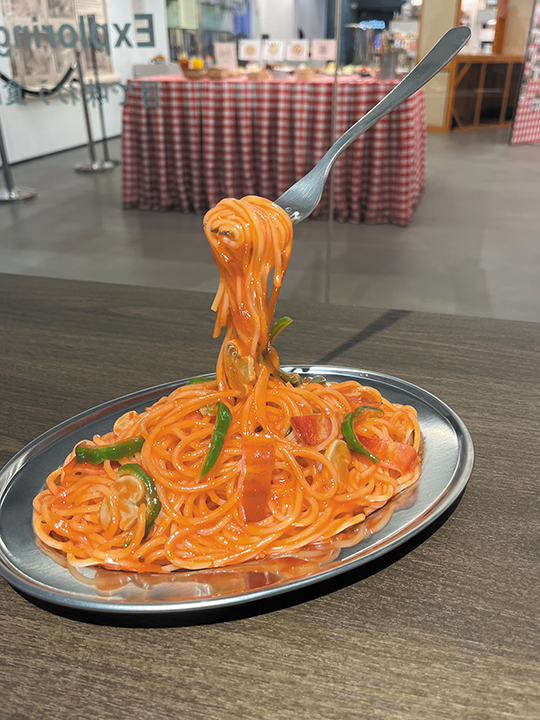
JAPAN HOUSE FOOD REPLICA of spaghetti with floating fork.
By 1917 there were craftspeople who specialized in making food models for school science classes as nutritional guides. It was easy to understand a balanced breakfast with proper portions if illustrated by a tray of life-size replicas; those with medical conditions, such as diabetes, were likewise helped by these realistic visual aids.
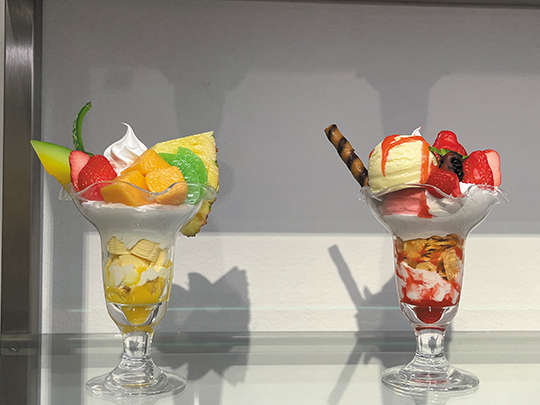
COLORFUL ICE CREAM parfaits that never melt.
The general use of food replicas increased in the 1920s, when it became popular to eat out in hotel restaurants. After World War II, food replica production exploded and diversified and when the number of restaurants and other eateries expanded throughout Japan.
“Looks Delicious!” charts the rise of food replica culture and the advancement of the realistic aspect of the art. It shows the step-by-step process for creating the replicas and displays meticulously crafted fake foods to show the food specialties of each of Japan’s 47 prefectures. It’s hard not to absentmindedly take a bite!
“Looks Delicious!” Japan House, through Sun., Jan. 25; 6801 Hollywood Blvd., in Ovation Hollywood, gallery on the second floor; 800-516-0565; japanhousela.com. Free admission.
“Package Craft” at the Japan Foundation
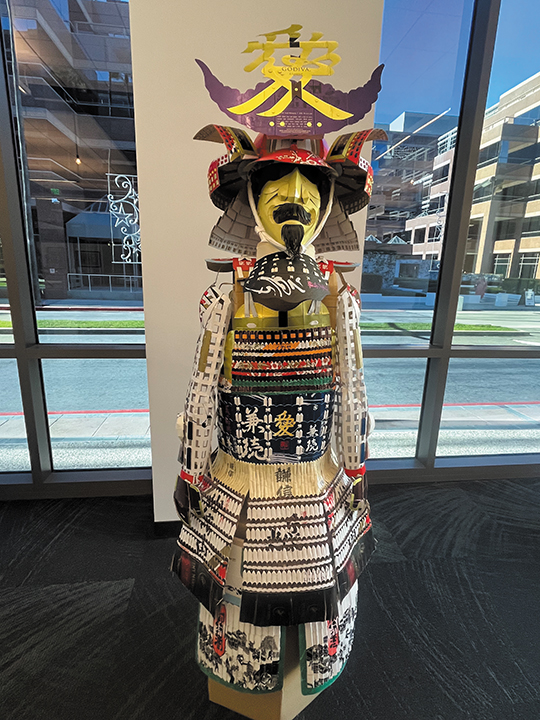
SAMURAI WARRIOR made from multiple Godiva chocolate boxes; Japan Foundation.
Artist Kazuma Takahashi always enjoyed transforming empty boxes into art. “Package Craft: From Candy Box to Sculpture,” at the Japan Foundation, showcases Takahashi’s delightful 3D creations. A Chivas Regal box was magically altered into a fierce dragon. An adorable yellow bee was formerly a box of Lipton tea. A cardboard sake box became a Buddhist deity. A popular breakfast cereal was granted new life as a school bus. Also included in the exhibit are patterns for turning an empty box of Sour Patch Kids candies into a perky little dog.
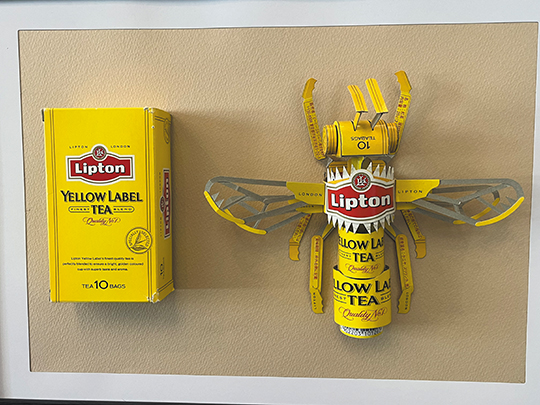
“LIPTON BEE,” by Kazuma Takahashi; Japan Foundation.
When developing his craft, Takahashi created rules for himself to follow, most notably that every scrap of the original container or containers must be used in the final product and any words must remain readable. The latter creates some amusing opportunities, such as a 4-foot. Samurai warrior with the brand “Godiva” emblazoned across his helmet’s crest.
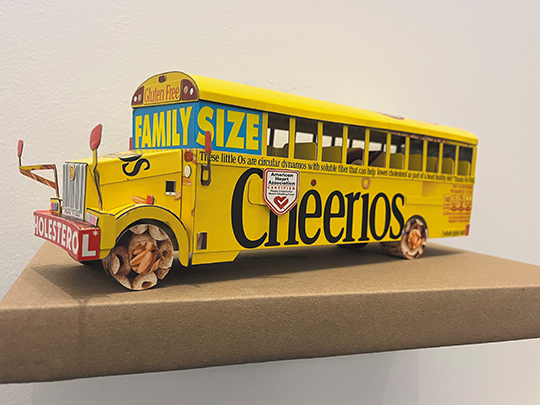
CHEERIOS CEREAL BOX bus.
Takahashi has given workshops on the shape-shifting craft throughout Japan. His work is not only entertaining to look at, but it is firmly rooted in a belief that recycling packages into fanciful figurines can save tons of packaging from the landfill. Four years after establishing the Japan Package Craft Association in 2011, it received the Good Design Award for helping to raise public awareness of sustainable practices.
“Package Craft: From Candy Box to Sculpture,” Japan Foundation, through February 18; 5700 Wilshire Blvd., Suite 100; 323-761-7510; jflalc.org. Free admission.
Category: Entertainment