New look to expand on La Brea Tar Pits’ Ice Age past
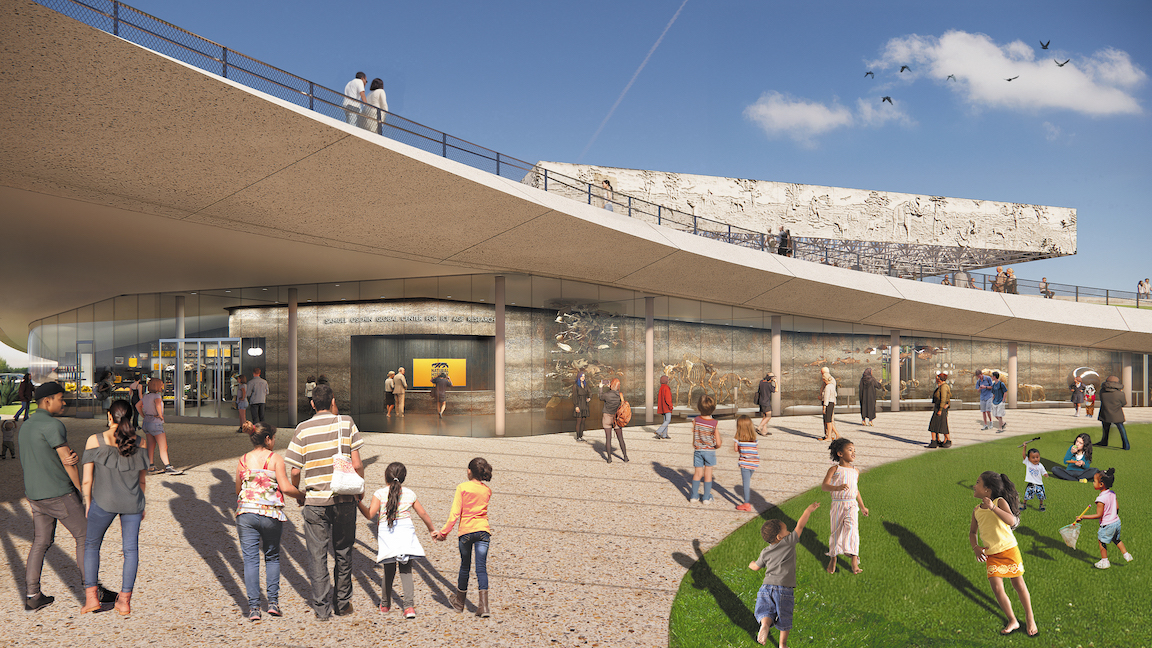
VIEW OF MAIN ENTRANCE and ramp gallery.
Renderings: Weiss/Manfredi, courtesy of NHMLAC
The La Brea Tar Pits—the richest Ice Age fossil site on the planet—continues to reveal stories of mammoths, dire wolves, and other creatures who lived in L.A. 10,000 years ago, many of whom were found in the sticky tar that still bubbles to the surface here.
Those stories of the area, now home to bustling Wilshire Boulevard, will continue into the future thanks to a recent pledge for much of the $240 million cost of the Reimagining La Brea Tar Pits campaign to transform the museum and surrounding park. The update includes the addition of a world-class global research center, all in time for the 2028 Summer Olympics, museum officials said.
Plans for the Samuel Oschin Global Center for Ice Age Research were announced last month on the heels of the philanthropic gift from the Mr. and Mrs. Samuel Oschin Family Foundation. It’s the largest donation the Natural History Museum of Los Angeles County, which oversees the La Brea Tar Pits, has ever received.
So far, $131 million of the $240 million goal has been raised.
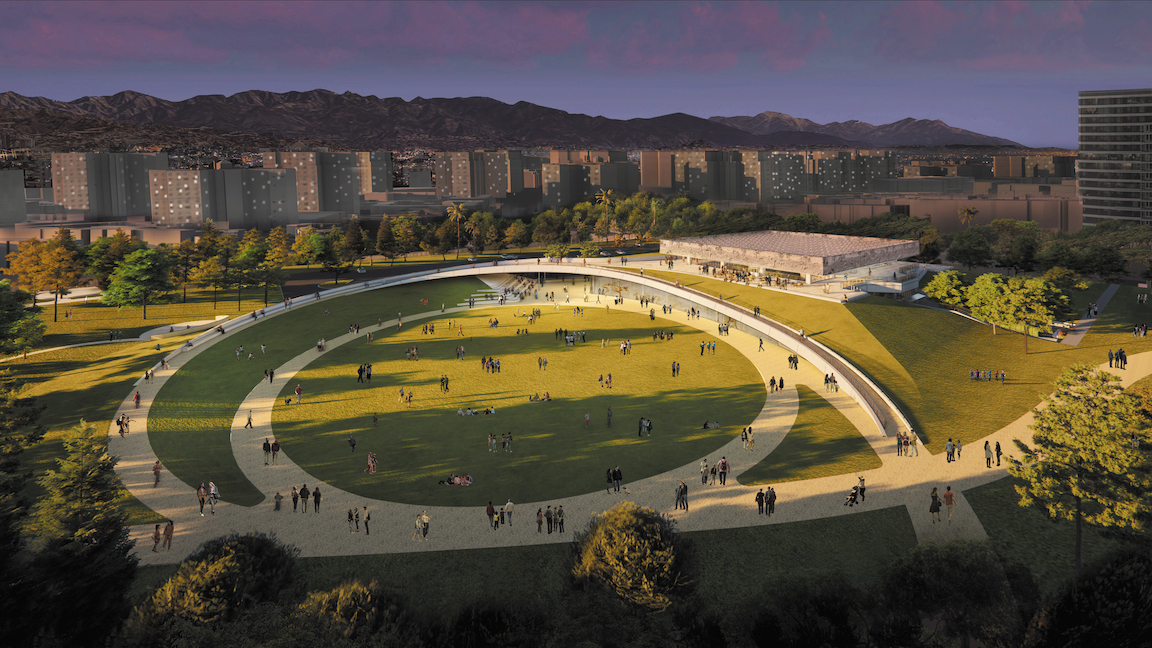
AERIAL VIEW shows the “triple pedestrian loop” path that connects excavation sites, research labs, the museum, and central lawn.
“There is no place on earth like La Brea Tar Pits,” said Lynda Oschin, secretary and chairman of the board of the foundation.
Lynda and her husband, Samuel, started the foundation “to inspire future generations by supporting organizations that deepen our understanding of the world around us,” she said.
The Global Center is part of the larger “Loops and Lenses” project, underway at the 13-acre site and led by architecture firm Weiss/Manfredi.
The design includes a one-kilometer triple pedestrian loop that connects active excavation sites, research and exhibition spaces, and the museum’s beloved grass slopes, which will be preserved and expanded. An ascending crescent of sloped walkways will provide access to a roof terrace with views of the museum’s historic frieze and campus.
The project includes renovation and expansion of the , first opened in 1977, a new Wilshire Boulevard-facing entrance, and a contiguous zone of free, public amenities, including shaded seating, outdoor gathering areas, and an outdoor amphitheater.
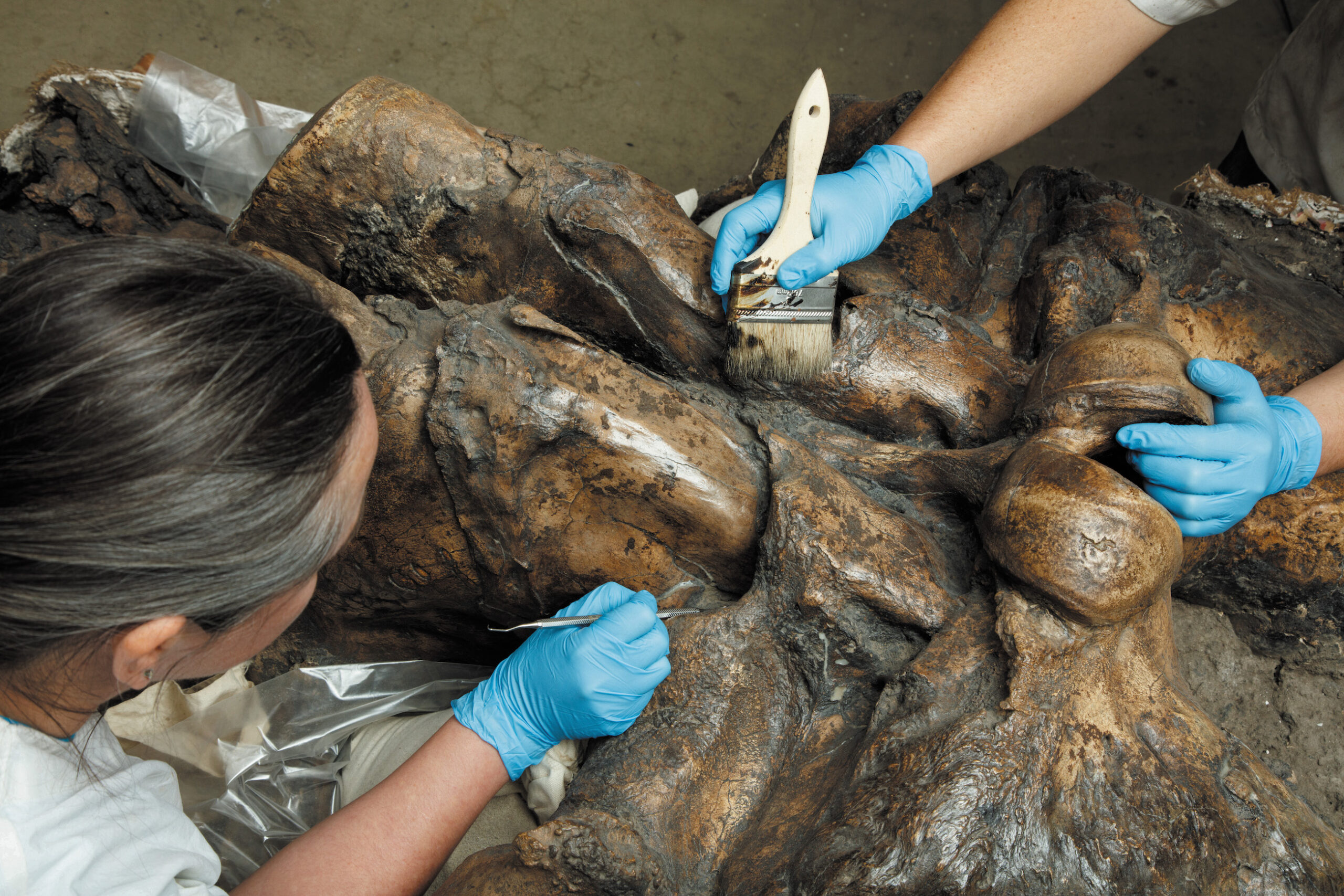
PREPARATORS clean part of the skull of a Columbian mammoth known as Zed in the Fossil Lab at La Brea Tar Pits.
Amsterdam-based design studio Kossmanndejong is leading the design for the exhibitions and outdoor spaces to include Pleistocene gardens that will connect landscape and ecology to the site’s Ice Age past.
Among favorites set to stay will be the iconic mammoth family sculpture in Lake Pit. The body of water is left over from asphalt mining operations in the late 1800s. Rain and groundwater collected above the bubbling asphalt, creating the small lake. The lake’s bubbles and distinctive odor come from a deep underground oil field.
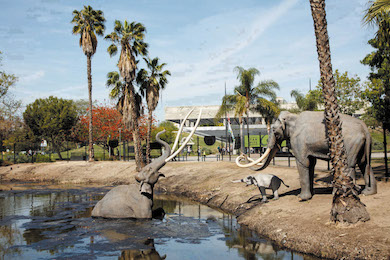
STUCK IN THE MUD. Iconic mammoth family sculpture shows a mammoth becoming trapped in “tar” at Lake Pit left over from asphalt mining operations in the late 1800s. Rain and groundwater collected above the bubbling asphalt and created the small lake. The lake’s bubbles, sheet, and distinctive odor come from a deep underground oil field.
Among specimens in the museum is the skull of the Columbian mammoth Zed, which can be seen in the Fossil Lab. The near complete mammoth was found in 2006 during the construction of the Los Angeles County Museum of Art’s underground parking structure, which is adjacent to La Brea Tar Pits.
Category: Entertainment