City sucks out asphalt underneath around Hancock Park
Ever wondered if there is more tar beneath the surface of Hancock Park? The answer is yes, and plenty of it. One can see it at the surface of the iconic Lake Pit that features statues of mammoths trapped in asphalt. There’s so much of the substance that the City of Los Angeles has been sucking out the black sticky goo, officially known as asphalt/bitumen, for decades, according to Dan Halden, director of external relations at StreetsLA. “This is a naturally occurring feature of the area,” said Halden.
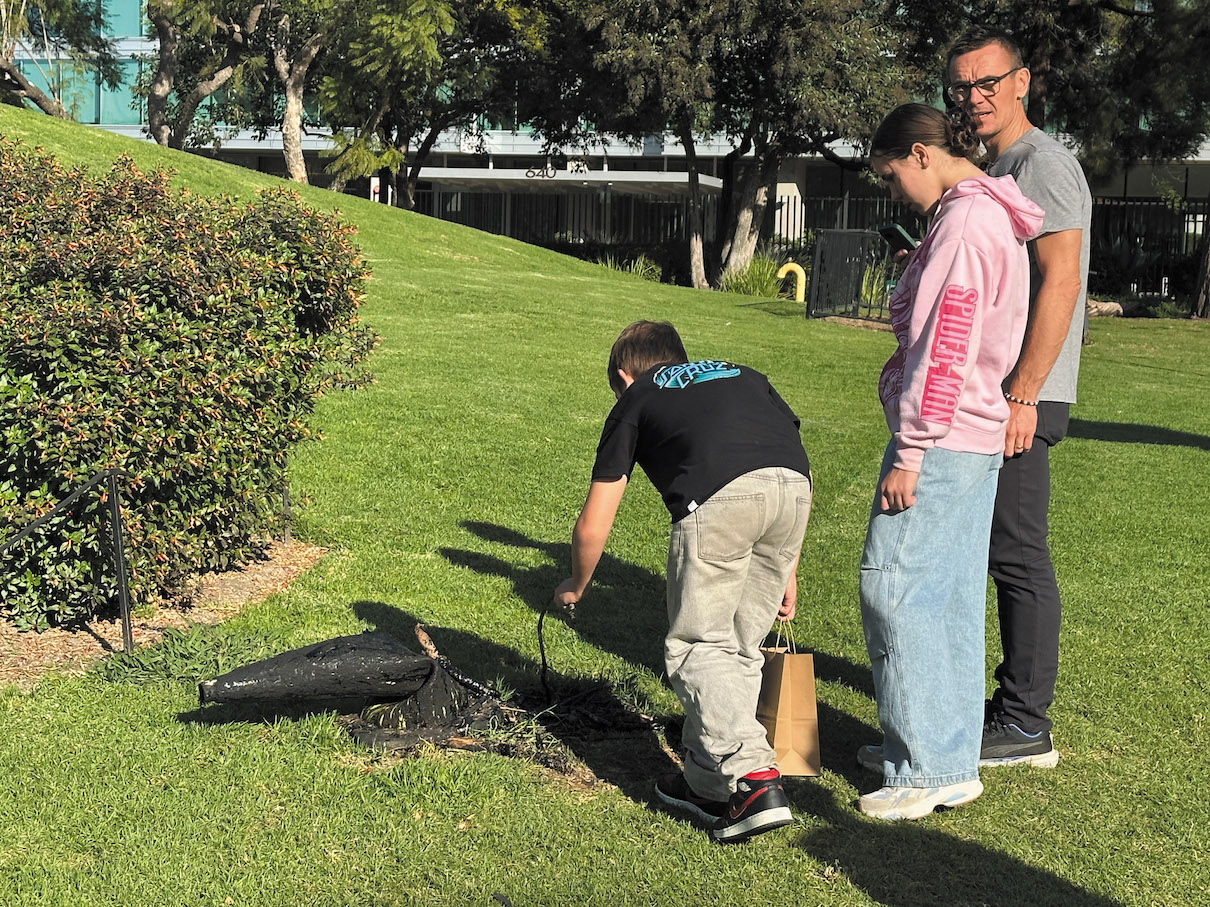
CHILDREN and adults can’t resist poking the tar.
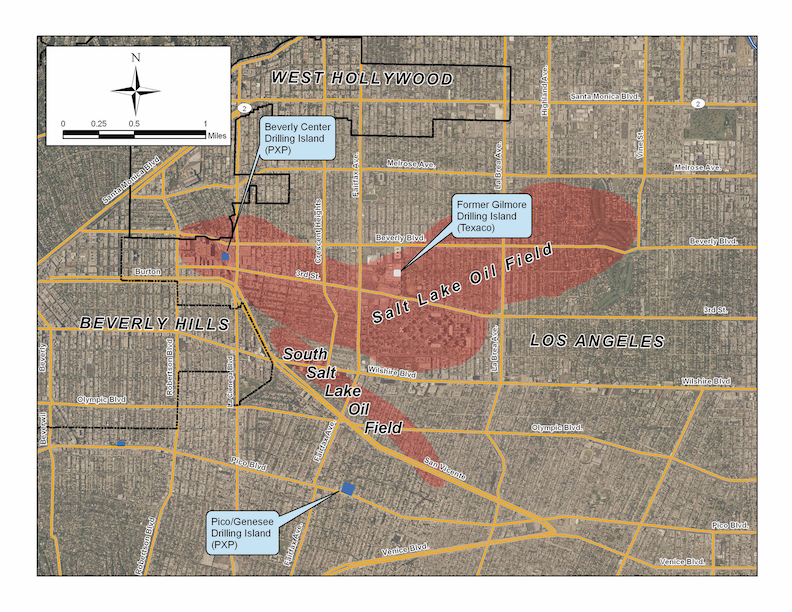
MAP SHOWING THE subsurface asphalt of the Salt Lake oil field.
This black goo is the heaviest form of crude oil according to Halden. There are about 30 sumps, also known as collectors, under Hancock Park. “The city employs a specialized contractor to inspect and service the sumps twice a week during dry weather and three times a week during wet weather. A StreetsLA contractor pumps out and assesses the publicly located sumps. This is a proactive and regular maintenance performed by the City,” commented Halden. It has been happening for decades.
Karin Rice, preparator for the La Brea Tar Pits and Museum concurred with Halden: “There may be sumps that would spill asphalt onto road surfaces if they weren’t pumped regularly. We’ve been told that some of the residential buildings east of the park need to regularly pump asphalt from sumps in their underground parking structures.”
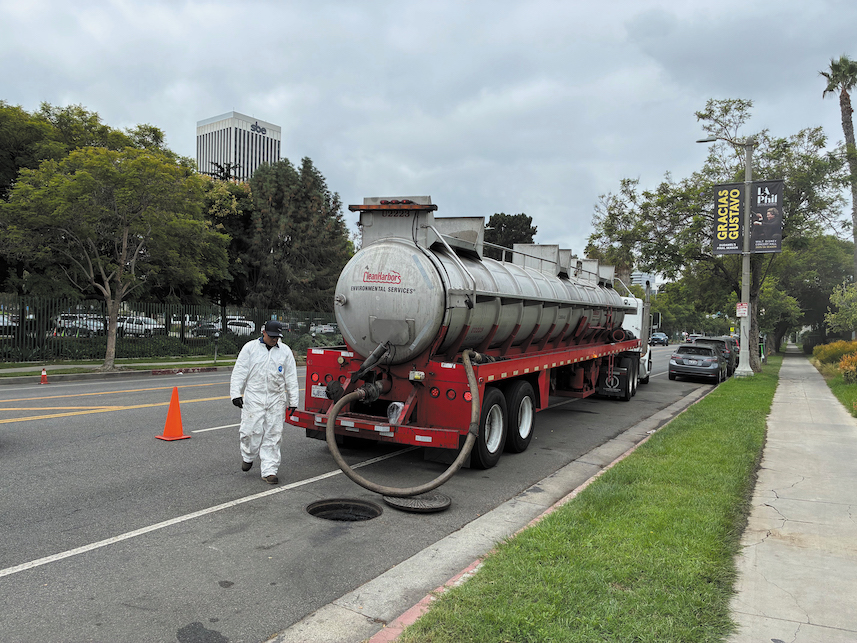
TRUCK REMOVING asphalt/bitumen from below the street’s surface.
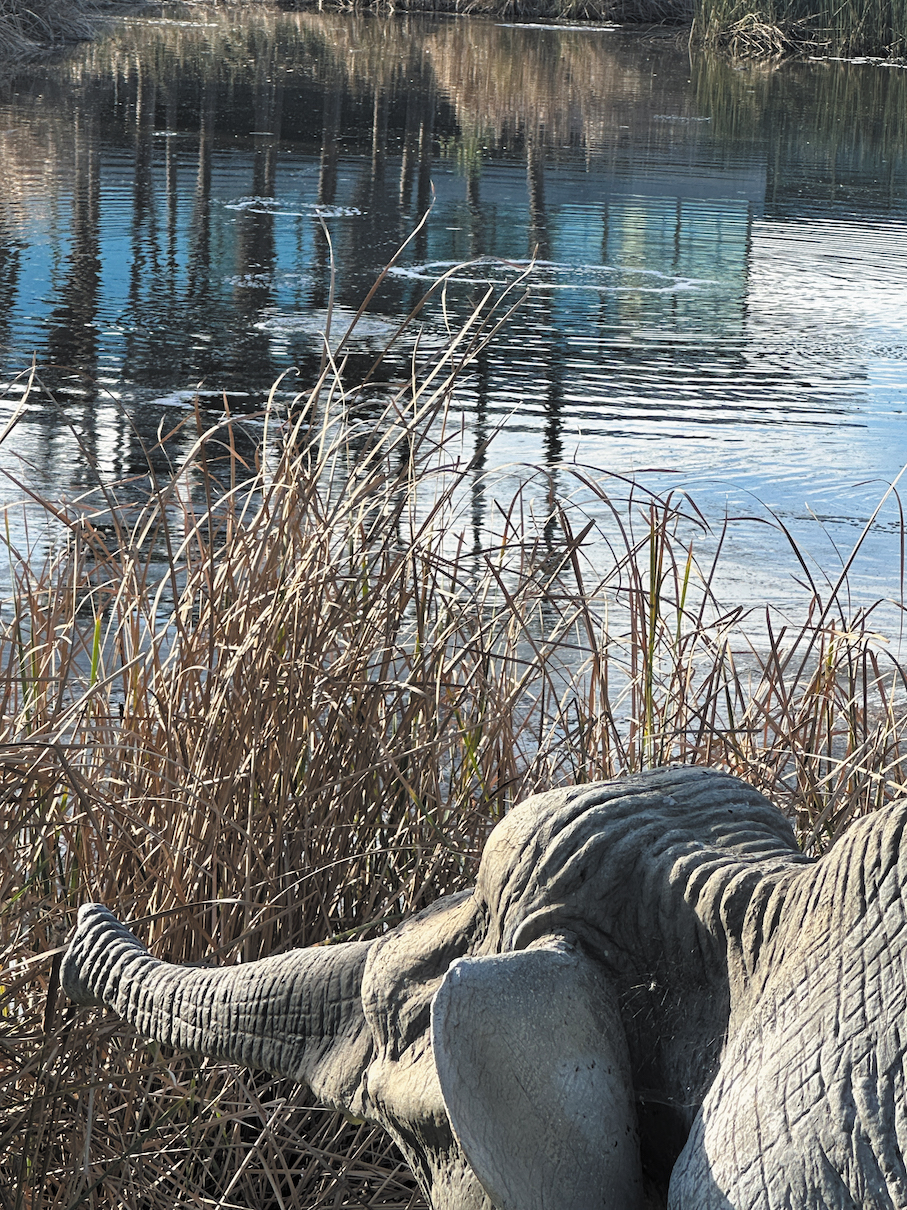
THE ICONIC BUBBLING Lake Pit in Hancock Park.
Rice also said that there is always a mix of oil and gas seeping to the surface in this part of the city because the park sits atop the southern edge of the Salt Lake oil field. Salt Lake is the name of the oil field beneath Hancock Park with pools ranging from 1,000 to more than 3,000 feet below the topsoil. It was discovered in 1902 and became the most productive field in California, producing more than 50 million barrels of oil before being completely dismantled in 2001.
The smell emanating from the trucks that remove the underground substance can occasionally be foul, and, one might think, noxious. Rice said, “Asphalt by itself is stinky because it’s a mix of hydrocarbons, but what most of us are probably reacting to is the rotten egg smell of the sulfur in the natural gases that seep to the surface. California oil has a greater sulfur content than oil from other parts of the country. Casual exposure is more unpleasant than dangerous.”
And, while it’s messy, and yes, smelly, children and adults alike can’t resist poking the gooey tar.
Category: Entertainment