Can solar bring the light back to our historic lampposts?
 At the Windsor Square Association Town Hall in November, questions were raised to our public officials about the continued streetlight outages in Windsor Square. One LAPD representative declared that due to their inability to curb copper wire theft, the city needed to shift to solar street lamps to get the lights back on. Even Mayor Bass has been on record supporting the transition to solar, initiating pilot projects back in 2024 in Van Nuys and other areas. But what about Los Angeles’ historic lampposts and the many thousands protected in our numerous Historic Preservation Overlay Zones? Is solar compatible with historic preservation?
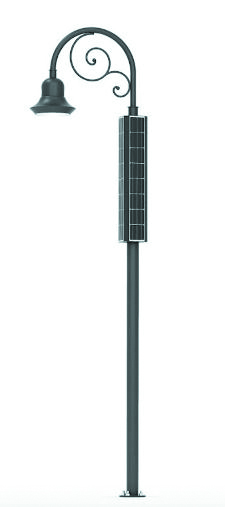
EXAMPLE of solar installed on historic streetlamps from Sepco and EnGo Planet.
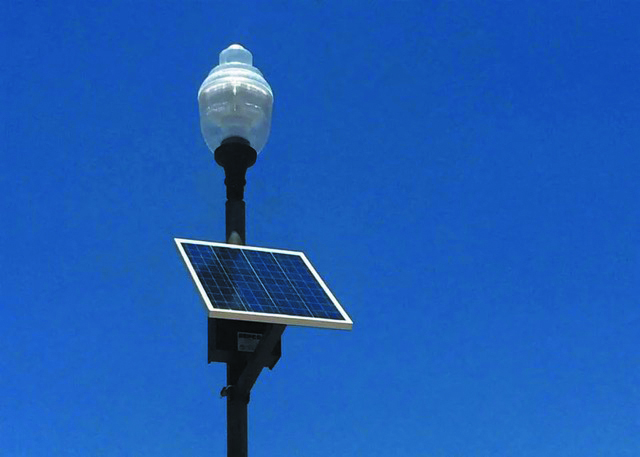
EXAMPLE of solar installed on historic streetlamps from Sepco and EnGo Planet.
I have to admit that as much as I support alternative and environmentally sustainable energy sources, I really hate visible solar on historic buildings. When it appears on the front façades of houses, it is generally glaringly obvious but also awful in appearance. This is largely the fault of the technology being relatively new, built for purpose rather than aesthetics. It is still evolving. It is also one reason that there is hesitation in utilizing solar in historic settings, where significance is often derived from design and aesthetics. Large, cumbersome, and unsightly panels are seen as incompatible with the preservation of historic character.
Retrofitting Los Angeles’ vast collection of historic lampposts would be particularly challenging, as conversions require the lamppost to be fitted with a solar panel, battery storage, charge controller, LED streetlight fixture, mounting hardware, and control system. Visually this currently translates to fitting the historic post with an engineered appendage holding a large rectangular solar panel or encasing a section of the post in a triangular sleeve of slender solar panels. Neither solution is appealing in an HPOZ setting. Another obstacle is cost, as solar systems are approximately 10 times more expensive to install than the current system, according to Miguel Sangalang, director of the Bureau of Street Lighting when asked by LAist in 2024.
Solar technology is slowly coming around to adapting to better design, at least in the home market. New products such as Building-Integrated Photovoltaics, building materials that are also solar power sources, are becoming increasingly available. These include solar shingles, which act as both roofing material and power source and better resemble traditional roofing materials. As with any new product there are downsides, such as higher costs and lower efficiency than traditional solar panels. There are even solar lampposts for home use in traditional designs with the solar panels integrated into the light cap. These seem sufficient for yards but do not provide the amount of illumination required for street lighting.
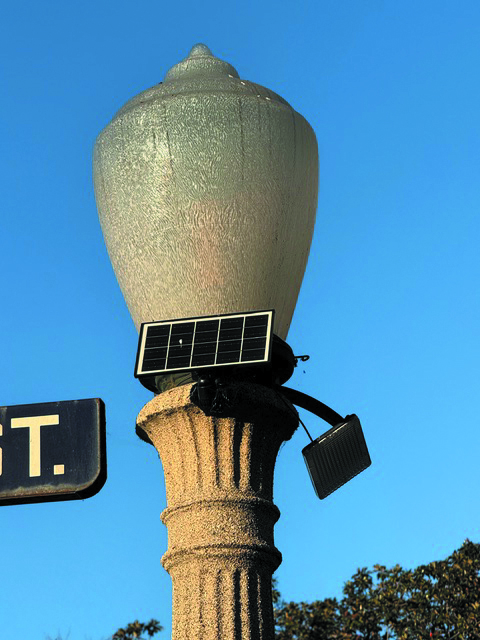
SOLAR LIGHTS installed by the La Brea Hancock Neighborhood Watch.
At this point, with many streets plunged into darkness at nightfall, tradeoffs may be worth it. It will take time for the technology, the market, and the city to respond with an aesthetically appropriate solution to historic lampposts and outages from copper wire theft.
In the meantime, our neighborhoods are forced to keep the pressure up through 311 reports of outages and repair requests to the city and our council offices to fix the lights. At some point, it may even be worth it to tolerate temporarily unsightly solar panels if it gets the lights back and keeps them on.
One has to admire the ingenuity of the La Brea-Hancock Neighborhood Watch, which took the initiative to install their own solar lights on the darkened historic lampposts along the 300 and 400 blocks of South Orange Drive. While neighborhood council representative Sixto Sicilia described the glow of the solar lights as “Twilight Zone,” the new fixtures do the job that the city can’t or won’t do—getting the lights back on.
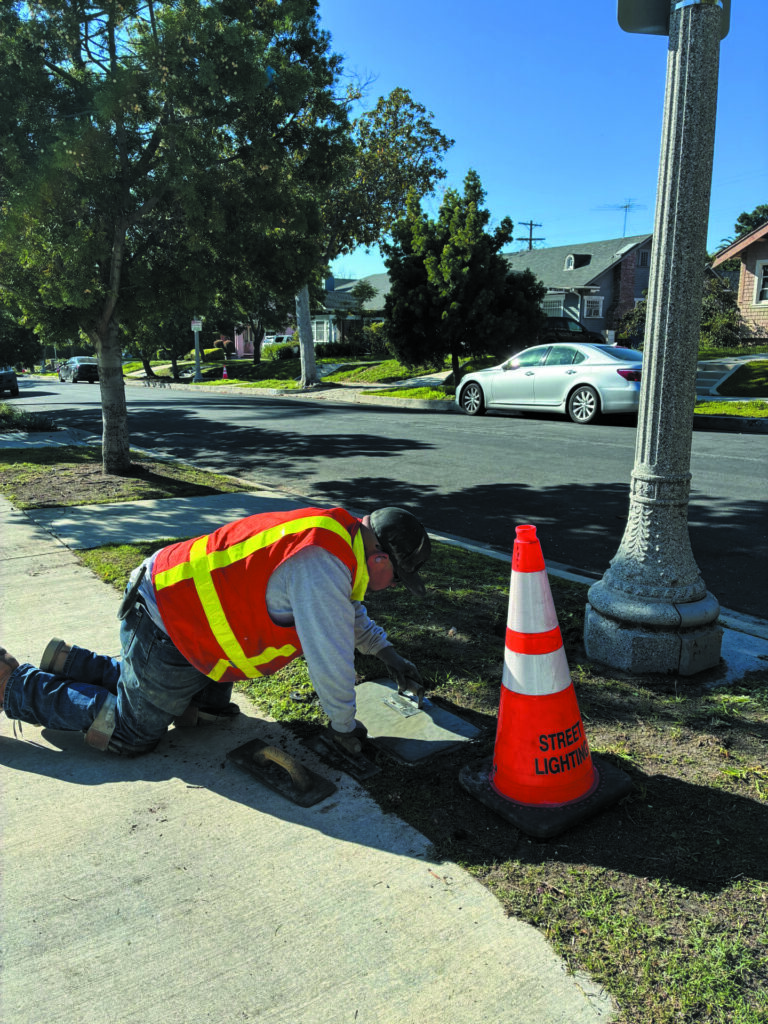
BUREAU OF STREET Lighting’s Angel Once seals a junction box on Ridgewood Place, making access to the junction box extremely difficult for thieves.
Category: Real Estate